
Psych-AID at the International Investigative Interviewing Research Group Conference 2026
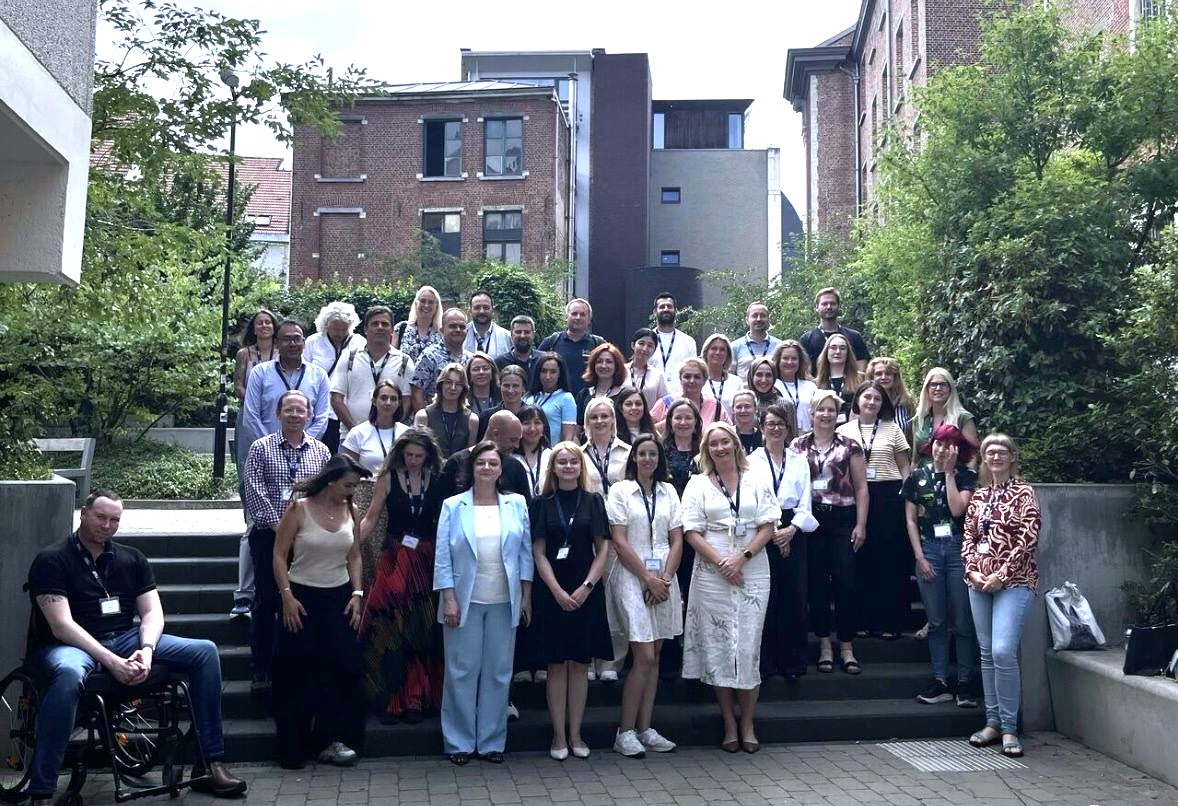
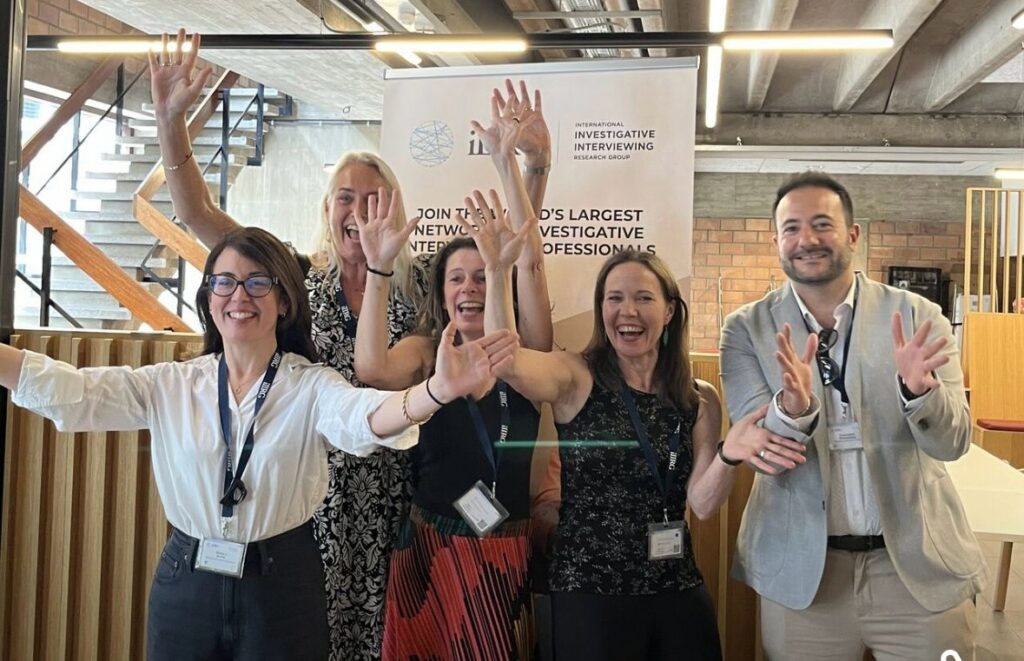
The Psych-AID Network attended the International Investigative Interviewing Research Group (iIIRG) Conference 2026, held at KU Leuven, Belgium, from 8 to 10 July 2026. Hosted locally by Dr Lore Mergaerts, the conference brought together police investigators, prosecutors, defence lawyers, forensic interviewers, interpreters, and academics to explore ways of making investigative interviewing practices more ethical, accurate, and humane. A central theme of the conference was the practical implementation of the Méndez Principles and efforts to bridge the gap between best-practice guidance and real-world interviewing practices. Other key topics included interviewing vulnerable individuals, memory science, interviews with children and adolescents, rapport-building, legal safeguards, and the emerging role of artificial intelligence in investigative interviewing.
Keynote Addresses
The conference themes were explored through keynote addresses, research presentations, panel discussions, and poster sessions. Among the keynote speakers, Prof. Dr. Lilian Milnitsky Stein (PUCRS and CogJus, Norwegian Centre for Human Rights) discussed the dissemination and implementation of investigative interviewing practices, highlighting both achievements and challenges. Prof. Dr. Lennart May (Medical School Berlin and founder of the Méndez Centre ZEFAB) reflected on the application of interviewing research in professional training and courtroom settings, including lessons learned from expectations that did not withstand the realities of practice. Dr. Philip Daeninck (KU Leuven and the Flemish Bar Council) provided a defence lawyer’s perspective on the right to remain silent, examining its legal and practical implications within investigative interviews.
Oral and Poster presentations by Psych-AID members
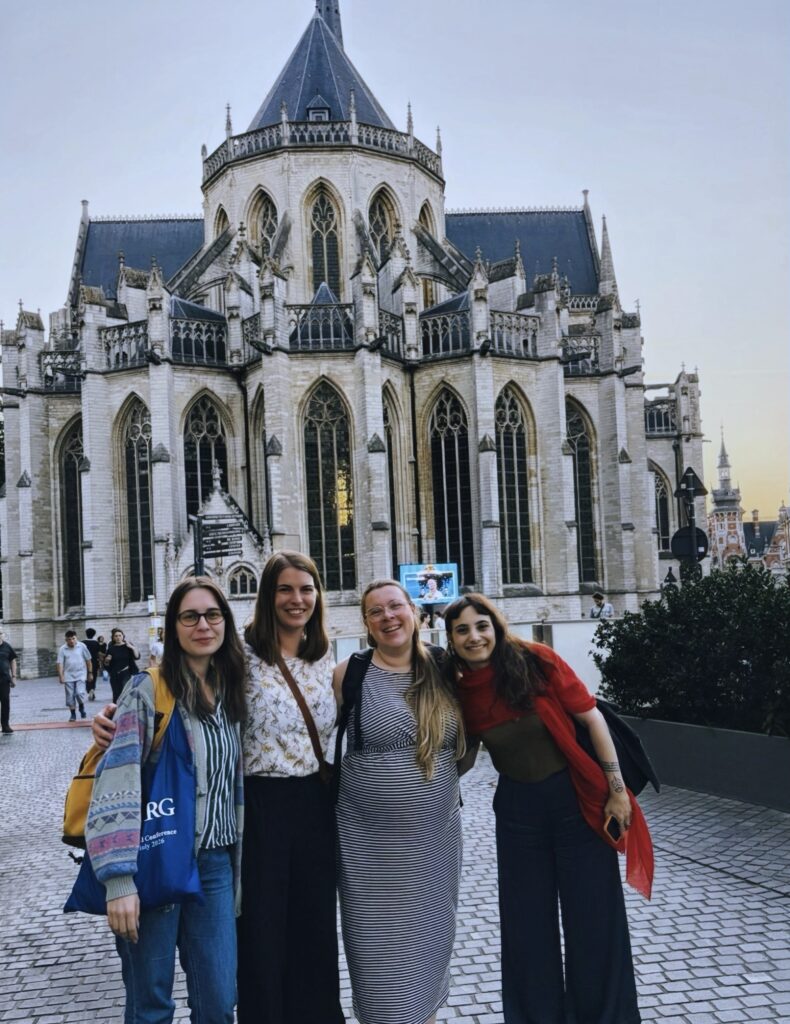
Representing the Psych-AID Network were Doctoral Researcher Anastasiia Valiavko, Postdoctoral Researchers, Dr. Dilhan Töredi, Dr. Jenny Skrifvars, and Dr. Laura Stevens and Co-Principal Investigator Prof. Julia Korkman. The team actively contributed to the conference through both oral and poster presentations, showcasing their research and engaging in discussions with international experts and practitioners in the field of investigative interviewing.
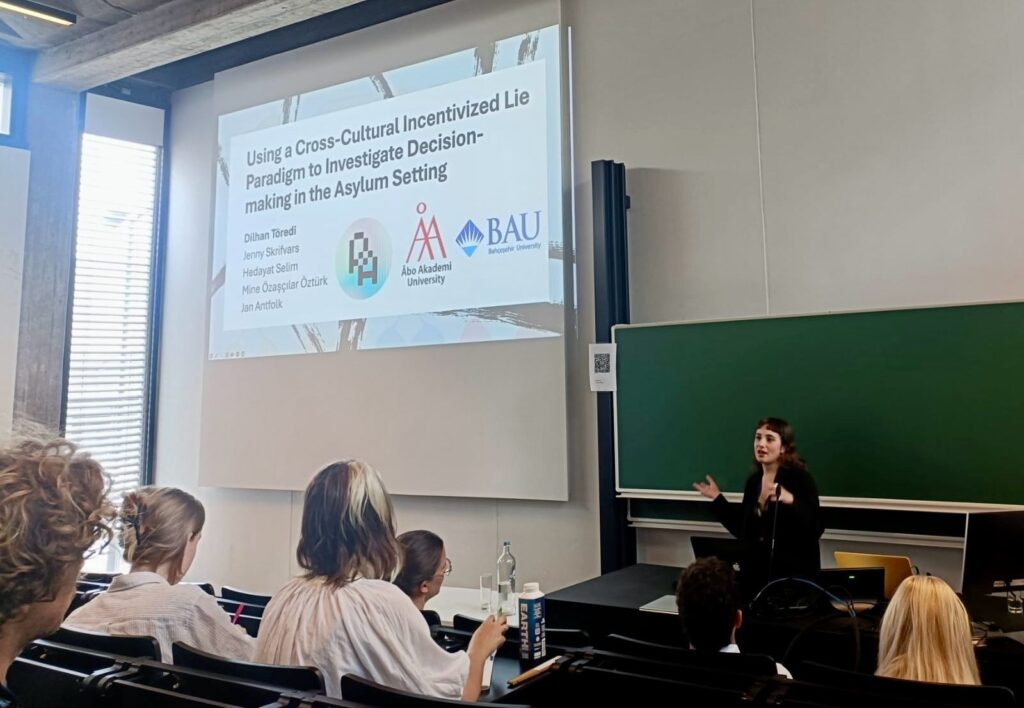
Dr Dilhan Töredi presented research titled “Using Incentivized Lie Paradigm to Investigate Decision-making in the Asylum Setting”. Most research on asylum interviews relies on archival data, where the ground truth of claims—that is, whether statements are actually truthful or deceptive—remains unknown. This limitation makes it difficult to evaluate the diagnostic value of potential credibility indicators. To address this challenge, Dr. Töredi outlined how the Psych-AID Network is applying an incentivised lie paradigm adapted to the asylum context. In this approach, participants are randomly assigned either to provide truthful accounts or to fabricate information, thereby establishing ground truth through experimental design. This methodology will enable the Network to systematically examine indicators associated with truth-telling and deception. Data collected through this study will also support future research within the Psych-AID Network aimed at improving understanding of credibility assessment in asylum interviews.
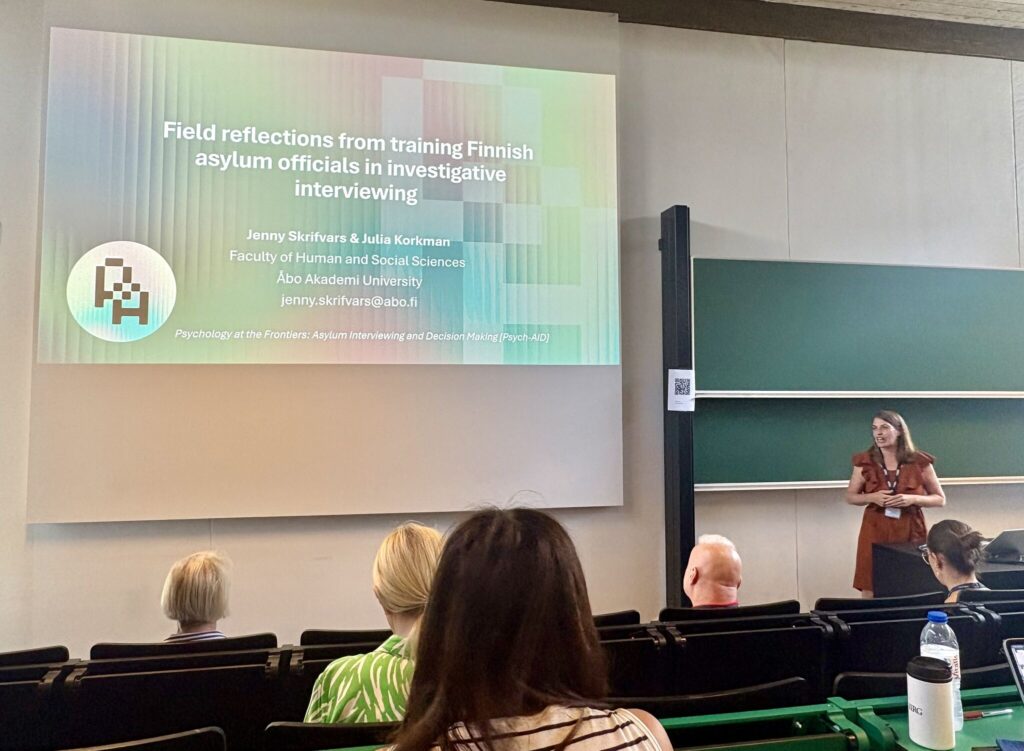
In a related presentation, postdoctoral researcher Dr. Jenny Skrifvars presented “Field reflections from training Finnish asylum officials in investigative interviewing”. Drawing on experiences from a legal psychology training programme developed by the Psych-AID group for Finnish asylum officials, Dr. Skrifvars and Prof. Korkman highlighted a range of challenges reported by participants in their investigative interviewing work. The most frequently cited challenges concerned procedural aspects of the interview process, including high workloads, the physical set-up of interviewing rooms, and coordination with interpreters and legal representatives. Officials also reported difficulties with questioning techniques, particularly in building rapport and providing clear instructions to applicants. Dr. Skrifvars highlighted that these challenges can adversely affect both interview quality and officials’ work-related stress, motivation, and well-being. She concluded with recommendations for future research and practical developments aimed at strengthening investigative interviewing within the asylum context. To read more about the publication of this presentation, follow this link.
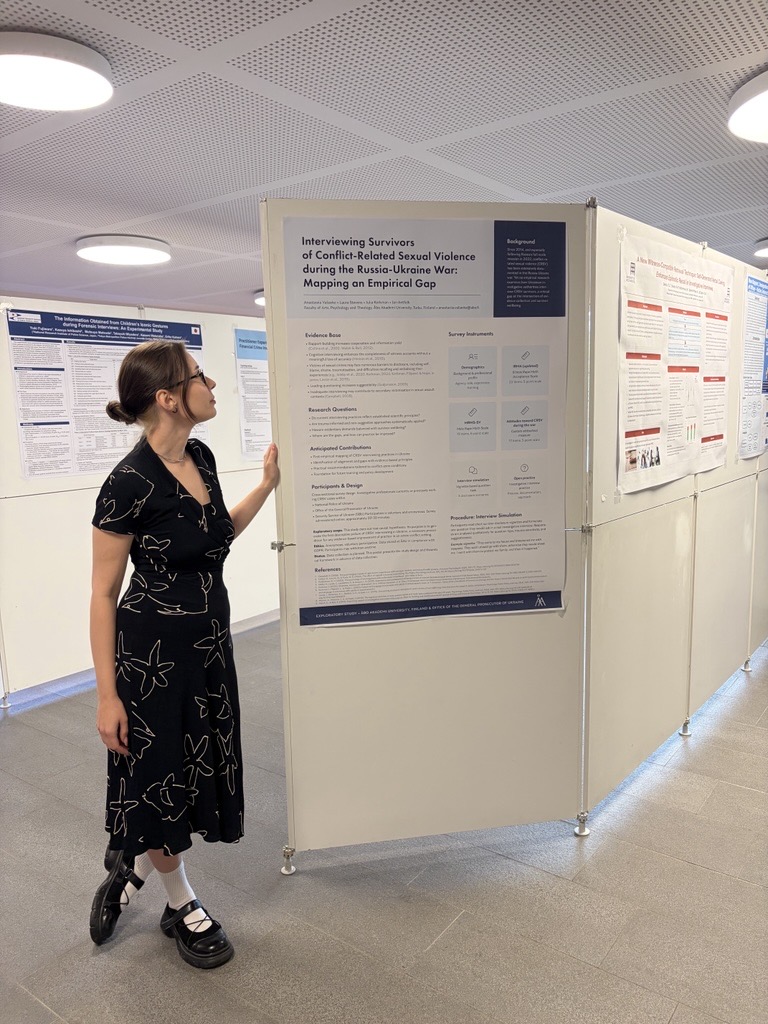
Last Doctoral researcher Anastasiia Valiavko presented a poster on “Interviewing Survivors of Conflict-Related Sexual Violence during the Russia–Ukraine War: Mapping an Empirical Gap”. Conflict-related sexual violence has been widely documented during the Russia-Ukraine war, both since the onset of conflict in 2014 and following the full-scale invasion in 2022. Despite growing evidence of such crimes, little is known about how Ukrainian investigative authorities conduct interviews with survivors in practice. To address this gap, Anastasiia presented an exploratory study idea which is aimed at surveying professionals from the National Police of Ukraine, the Office of the Prosecutor General, and the Security Service of Ukraine. The research will explore the extent to which current interviewing practices align with evidence-based recommendations, including rapport-building techniques, cognitive interviewing methods, and trauma-informed, non-suggestive questioning approaches. The findings aim to inform practical recommendations for investigative interviewing in conflict settings and contribute to the development of survivor-centred and evidence-based practices.
Psych-AID excels at the iIIRG Conference
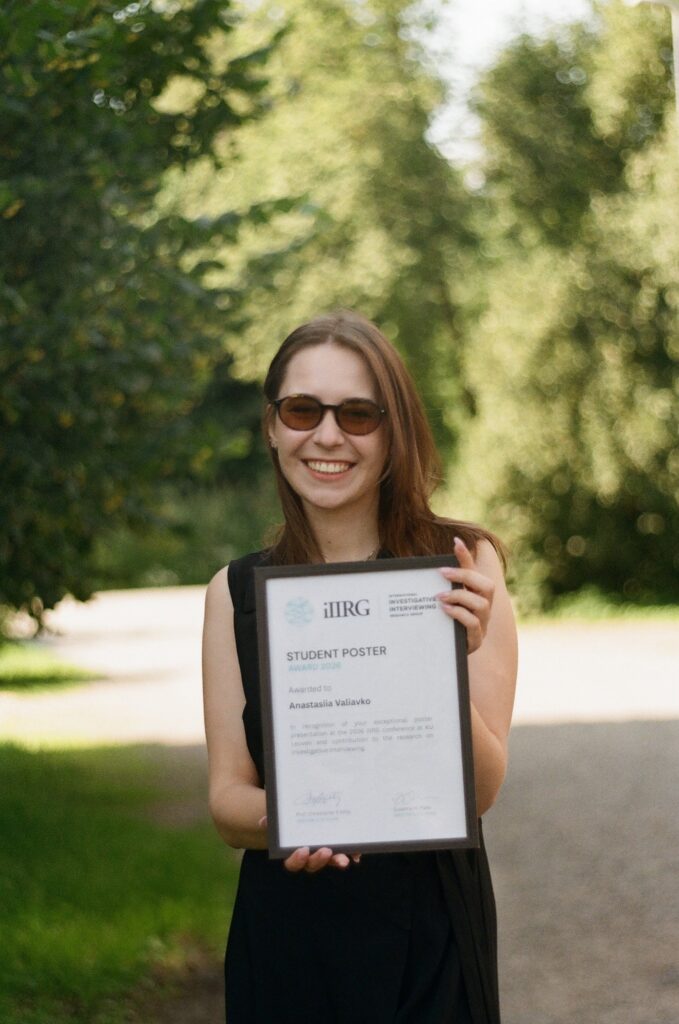
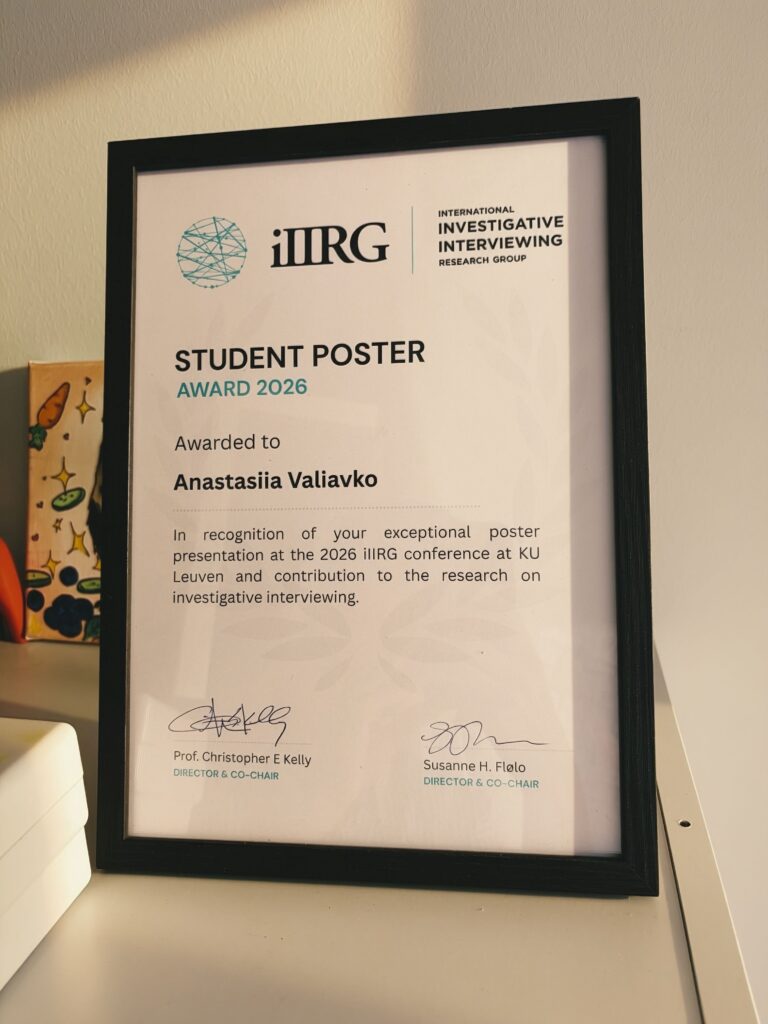
Doctoral Researcher Anastasiia Valiavko was awarded the Best Student Poster Award, recognising both the originality of her research and the excellence with which it was communicated. This well-deserved achievement reflects the innovation, rigour, and impact of her work. We extend our heartfelt congratulations on this accomplishment and look forward to following her future contributions to the field.