
Psych-AID at the LGBTQ+ Refugees in the Welfare State: Research, Policy and Practitioners in Dialogue Conference
Doctoral researcher Malin Ekelund and Prof. Jan Antfolk attended the international conference on LGBTQ+ Refugees in the Welfare State: Research, Policy and Practitioners in Dialogue. The conference was held at Ekonomikum, Uppsala University, from 21–22 May and hosted by the Department of Human Geography at Uppsala University together with the QUEEN (QUeer rEfugees rEsearch in the Nordics) network, and funded by the Royal Swedish Academy of Sciences.
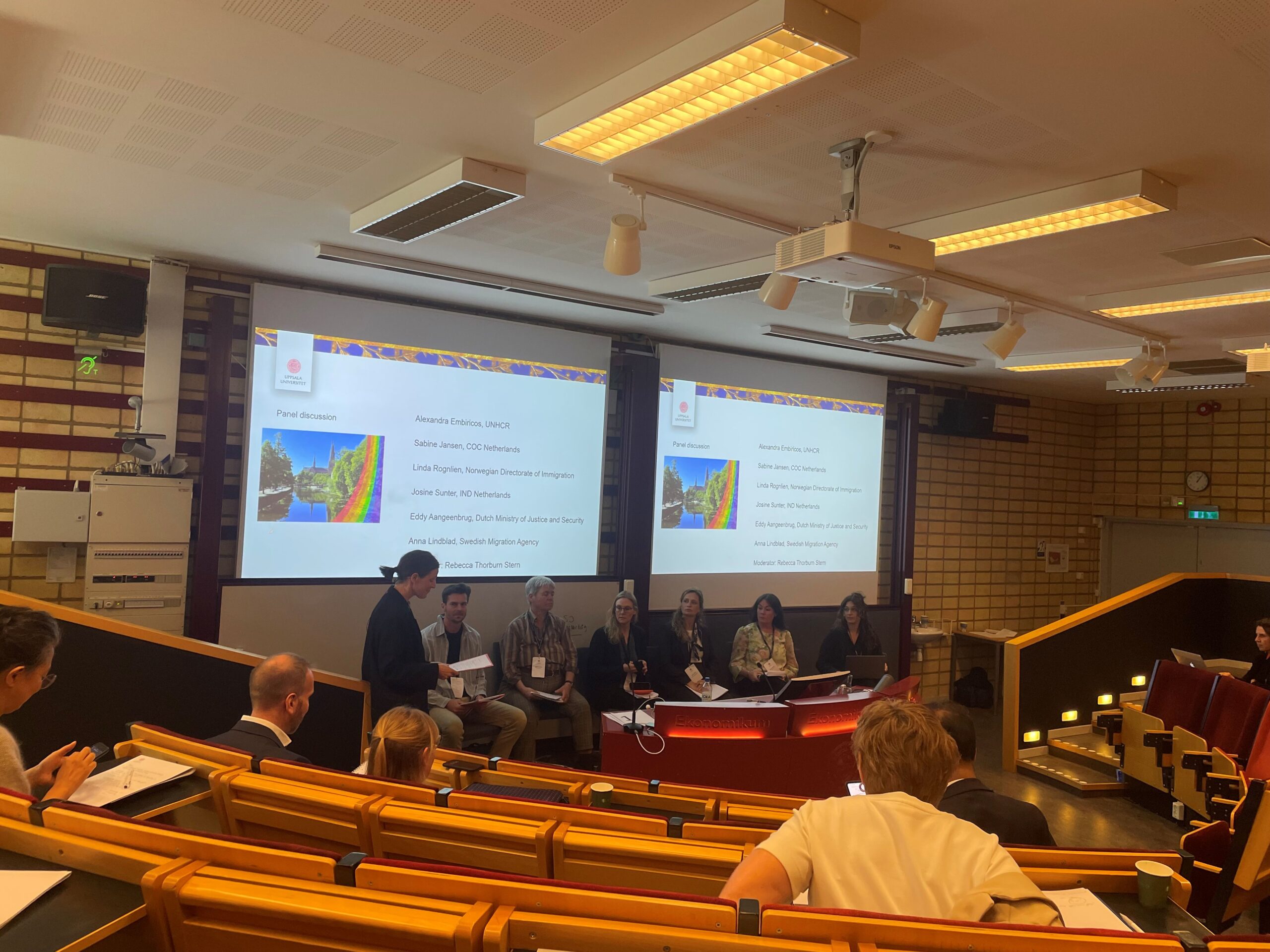
The conference brought together researchers and practitioners, including migration authorities, lawyers, and NGOs and was aimed at building meaningful dialogue across these communities rather than focusing solely on traditional academic presentations. This focus was especially timely as the EU Pact on Migration and Asylum and the new EUAA Practical Guide for applicants with diverse sexual orientations, gender identities, gender expressions, and sex characteristics will significantly shape asylum procedures for LGBTQ+ refugees in EU countries in the years ahead. At the same time, Nordic research on LGBTQ+ refugees has grown rapidly since the QUEEN network was established in 2019, generating important insights into reception, legal security, health, and integration — yet a significant gap between research and practice remains, and prejudices and misconceptions about LGBTQ+ identities continue to influence both governmental practices and societal attitudes.
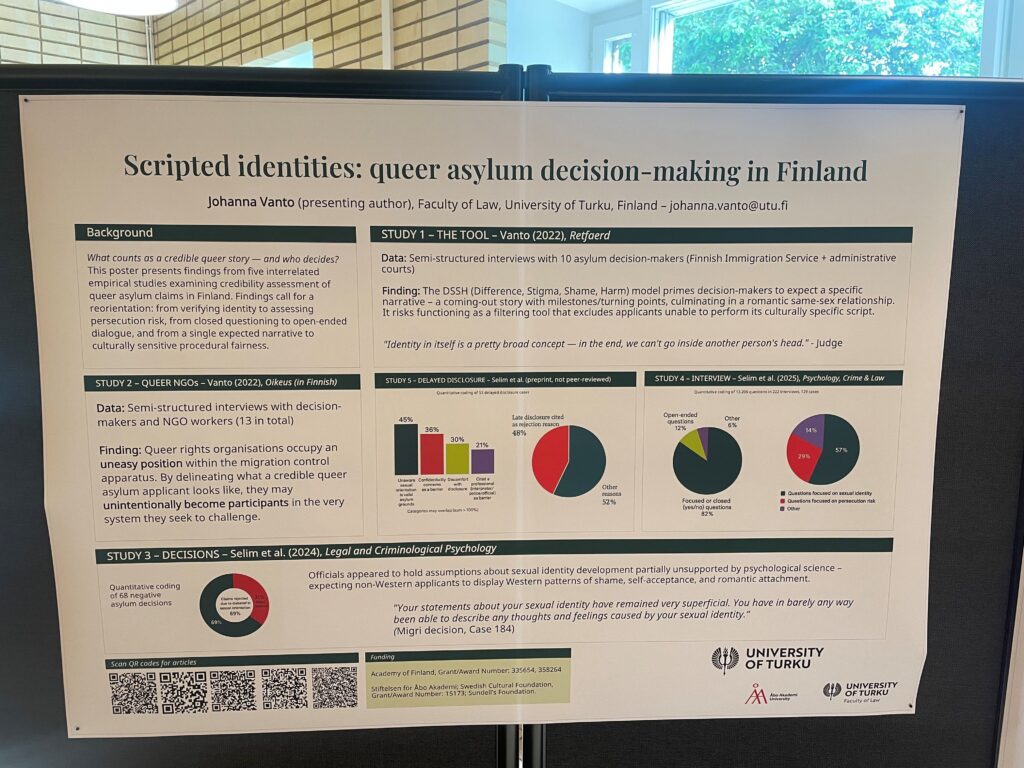
The program combined keynotes, panel discussions, and short research presentations with interactive formats including small-group discussions, poster sessions, and policy brief exchanges. Attendees shared current research and field experiences, developed collaborative frameworks and policies grounded in research, strengthened Nordic cooperation on the situation of LGBTQ+ refugees, and contributed to awareness-raising that counters prejudices and misconceptions, particularly in the context of migration and asylum.
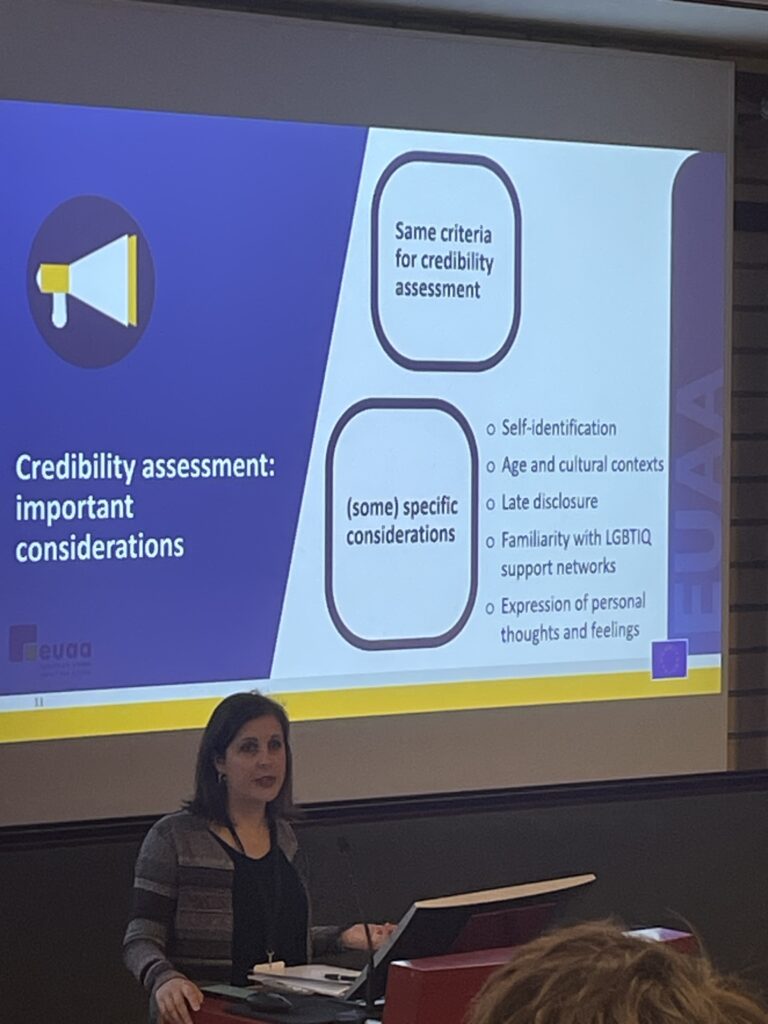
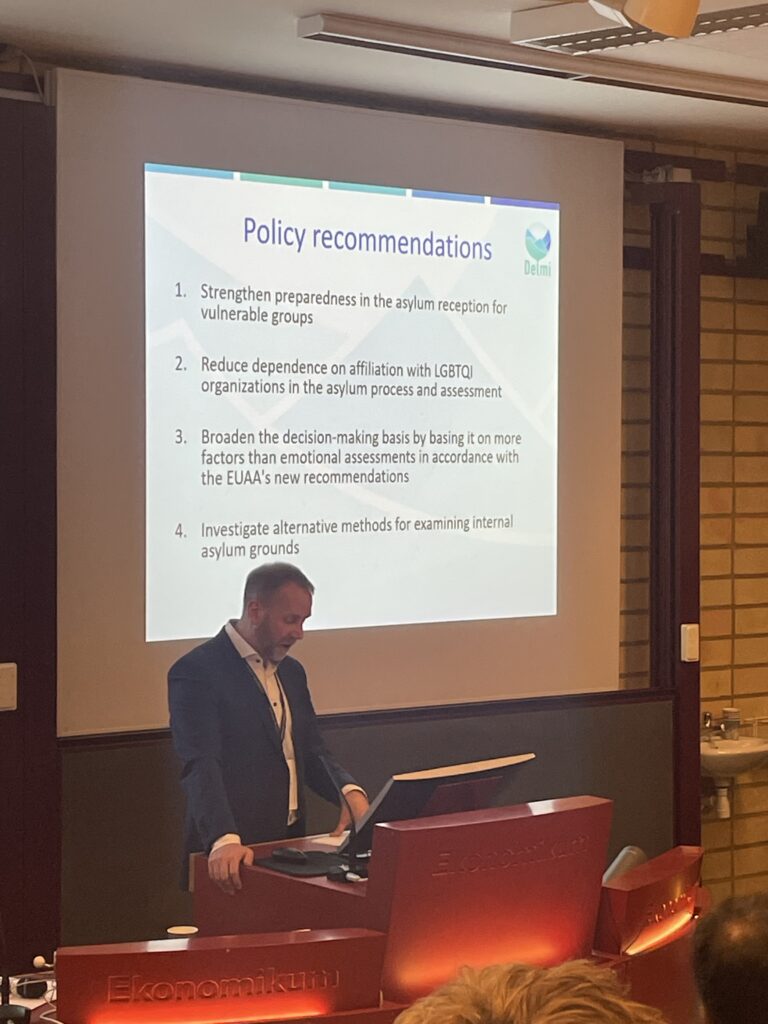
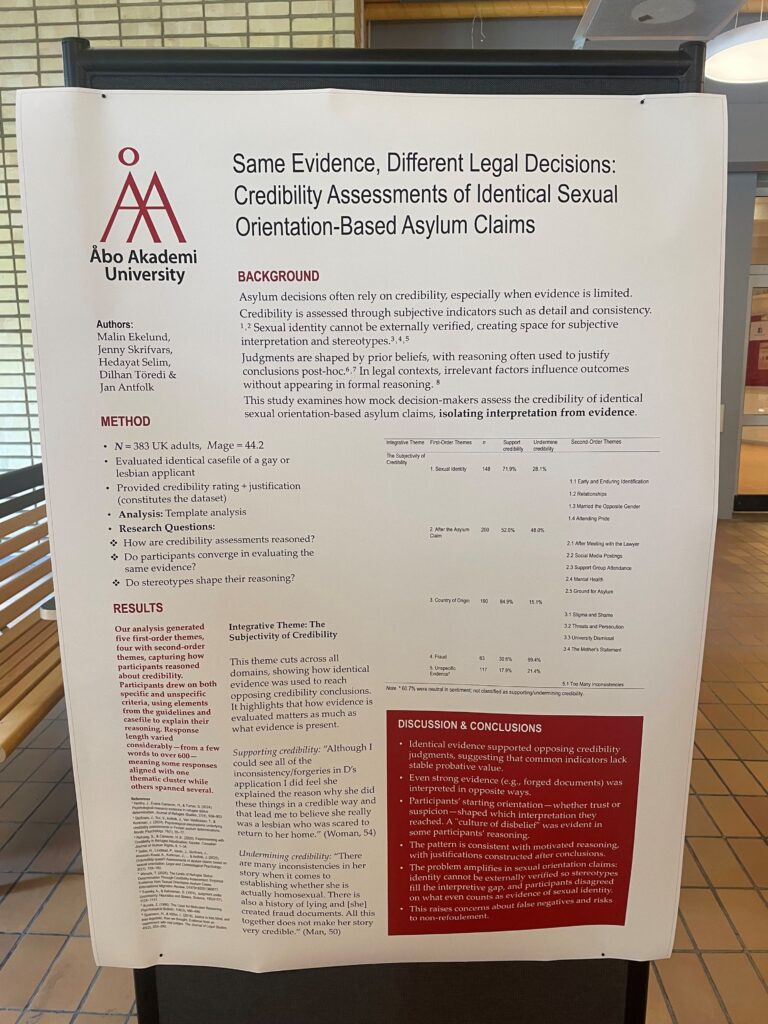
Malin presented a poster on credibility assessments in sexual orientation-based asylum claims, drawing on written rationales from 383 mock decision-makers. The study found a high degree of individual discretion, with the same evidence frequently used both to support and to undermine credibility. This finding suggests that common credibility indicators may depend more on interpretive framing than on stable probative value.