
Marine Science, Opera, and Island Time at Korpoström
Text & images: Einat Amir-Ahola & Christian Pansch-Hattich
What happens when marine ecologists, opera creators, artists, and students gather on an island to talk about the sea?
At the Skärgårdscentrum Korpoström, what was planned as a 90-minute research information session quietly stretched into nearly four hours. Nobody seemed eager to leave. Questions kept coming, conversations spilt over, and coffee cups stayed full. Perhaps, as someone joked, this is simply island time.
Organised by marine ecologist Prof. Christian Pansch-Hattich from Åbo Akademi University and hosted by the Korpoström Archipelago Centre, the morning seminar introduced this summer’s marine research projects taking place in and around the Archipelago Sea. But this was no ordinary scientific meeting. The gathering was warmly welcomed by Tuuli Toivola, Head of Operations at Korpoström, who encouraged participants to see the seminar not only as a chance to learn about ongoing work but also as an opportunity to spark future collaborations with the Centre.
Alongside marine researchers were visiting artists led by Maria Lindeman, Director and Doctoral Researcher at Stockholm University of the Arts, developing Sea of Life: Marine Research in Resonance, an opera and immersive exhibition project that explores how marine research on environmental stressors might be translated into artistic experience. Also joining the gathering was this year’s Korpo Archipelago Residency artist, Teemu Lehmusruusu, whose work at Korpoström is supported by Pro Artibus and a SOS Project Booster grant.
What emerged was something special: not the usual scientists presenting data and artists presenting artworks, but a genuinely shared space where everyone contributed on equal terms.
The morning began with marine ecology research. Merle Kleineberg and Jonathan de Koning, students from the GAME (Global Approach in Marine Ecology) project introduced work on underwater soundscapes and how sound, from natural marine environments to boat noise, may shape the colonisation of underwater hard-bottom communities. Christian Pansch-Hattich then presented a citizen science project exploring heatwaves and thermal microclimates across the Archipelago Sea, while Sarah Rühmkorff and Petra Avo discussed the resilience of seagrass in a warming world.
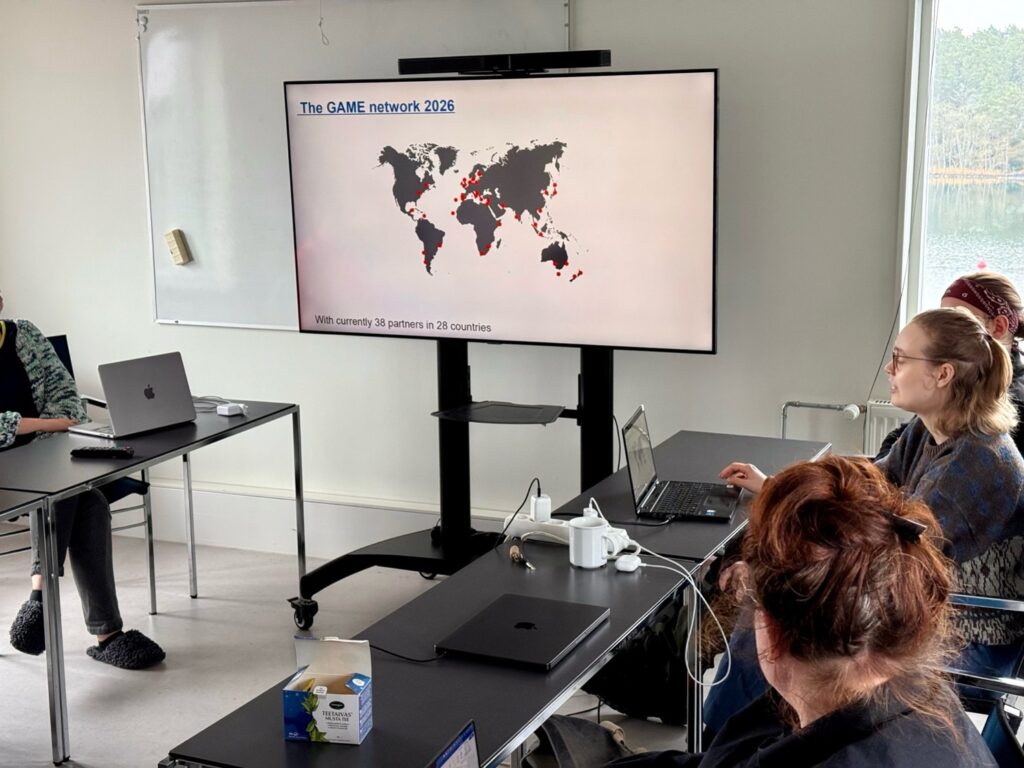
Yet the scientific presentations did not remain confined to science: Questions moved easily across disciplines. Could underwater sound someday be composed not only to study marine environments, but perhaps even to support biodiversity? Scientific research often moves carefully, testing one step at a time. Artistic thinking, meanwhile, can sometimes leap ahead, imagining futures that science may only later begin to test.
The boundaries between disciplines softened further during the presentation of Sea of Life: Marine Research in Resonance. Composer Lorenzo Romano and soprano Agnes Wästfelt offered a glimpse into the emerging opera project, including a moving live performance of music inspired by marine research. Hearing opera resonate through the seminar room transformed the atmosphere. Data, ecological processes, and scientific concerns briefly became something felt as much as understood.
As discussions unfolded, participants reflected on what happens when different forms of expertise meet. Marine scientists spoke about the importance of explaining ideas across disciplines and asking what might otherwise feel like “stupid questions.” Artists described how unfamiliar concepts expand thinking and open new ways of experiencing the world.
“There’s science in art and art in science”, Maria Lindeman reflected during the discussion, capturing something many in the room seemed to recognise. As discussions unfolded, participants reflected on what happens when different forms of expertise meet and what makes interdisciplinary exchange possible in practice.
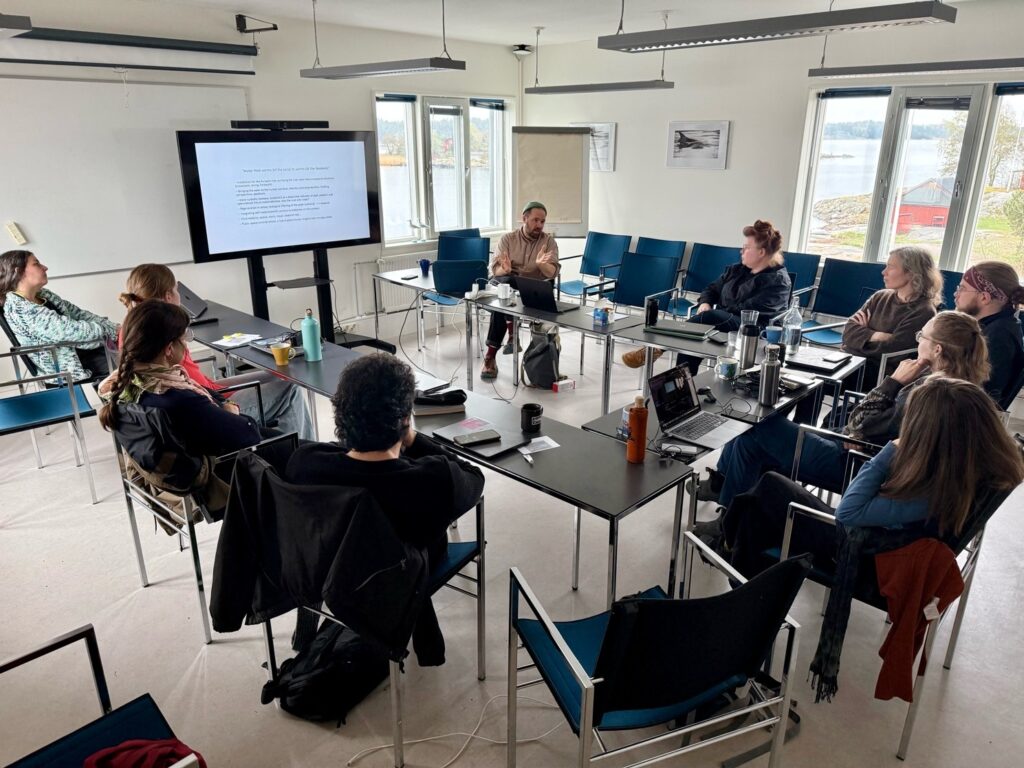
Christian Pansch-Hattich emphasised that successful interdisciplinary work does not require simplifying expertise, but rather learning to communicate across disciplines. When marine researcher Sarah Rühmkorff wondered how deeply she should explain her work to a mixed audience of scientists and artists, Christian encouraged her to present it “to the same depth as you would with your colleagues”. “Everyone might understand some basics in ecology”, he added, “It’s merely the terms that should be cleared”.
The discussion soon turned to language itself: how new vocabularies can initially feel unfamiliar, yet also open new ways of seeing. For resident artist Teemu Lehmusruusu, encountering unfamiliar scientific concepts was not a barrier but an opportunity. New terms, he suggested, can expand thinking and enrich how we experience the world.
In many ways, that spirit seemed to define the seminar. Rather than speaking past one another from disciplinary silos, participants lingered in questions, curiosity, and shared attempts to understand the Archipelago Sea from multiple perspectives.
Importantly, the conversations did not end at inspiration. By the close of the seminar, new connections had already begun to take shape. Composer Lorenzo Romano found common ground with the GAME students around underwater soundscapes and the possibilities of listening to marine environments in new ways. Meanwhile, resident artist Teemu Lehmusruusu began discussing potential collaboration with Sarah Rühmkorff around diving, seagrass sampling, and experiencing fieldwork firsthand. He was also invited to join the researchers’ weekly meetings at the station, opening up new possibilities for artistic engagement with ongoing marine research.
Perhaps one of the strongest reminders from the day was how naturally collaboration can emerge when people gather around shared questions rather than staying within disciplinary silos. Scientists and artists do not necessarily need entirely separate spaces to work together. Sometimes, what matters most is simply creating opportunities to sit around the same table, share work in progress, ask questions, and stay curious.
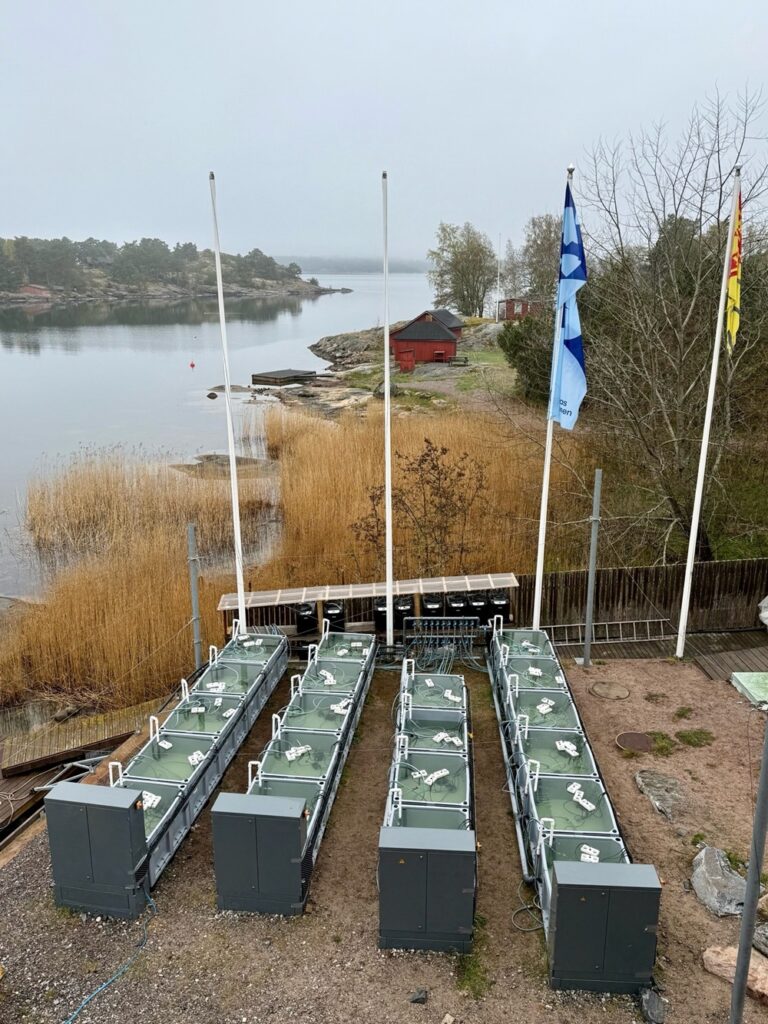
Sitting in a room where you could see the Archipelago Sea from each and every window, Korpoström seems particularly good at making this possible. Perched between land and sea, research station and cultural meeting place, it offers something increasingly rare: time and space for conversations to unfold slowly. Enough time, apparently, for a 90-minute seminar to become four hours of intense discussions.
And the conversations did not stop there. After the seminar, the group piled into the research station’s large van and headed to a local restaurant to continue sharing ideas over lunch, extending discussions that had already begun to blur the boundaries between marine science, art, and everyday life.
Perhaps this is what makes Korpoström special: not only the research that takes place there, but also the conditions it creates for unexpected encounters, shared realities, and collaborations that might not otherwise emerge. Enough space for marine ecology and opera to begin speaking the same language.
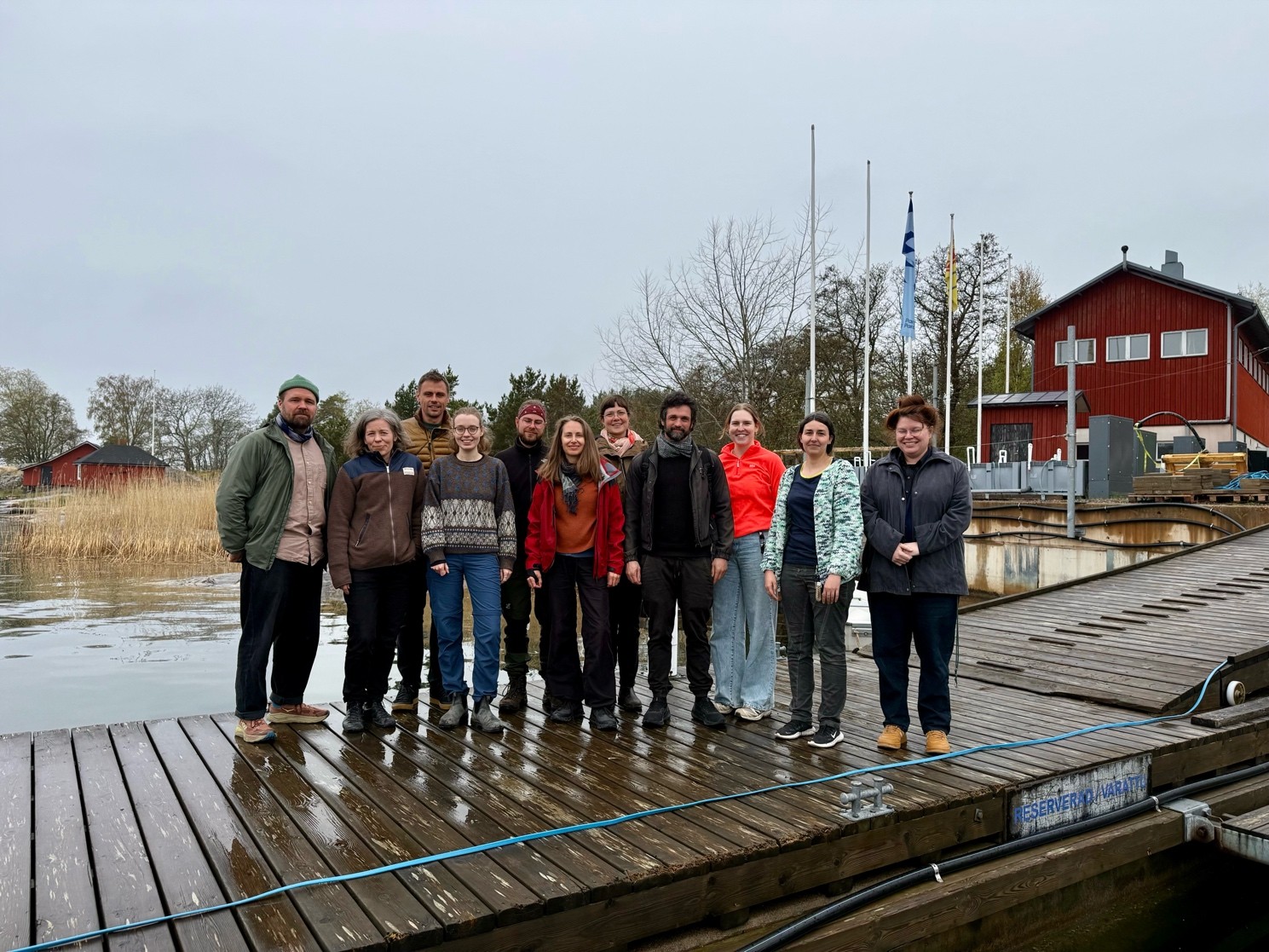
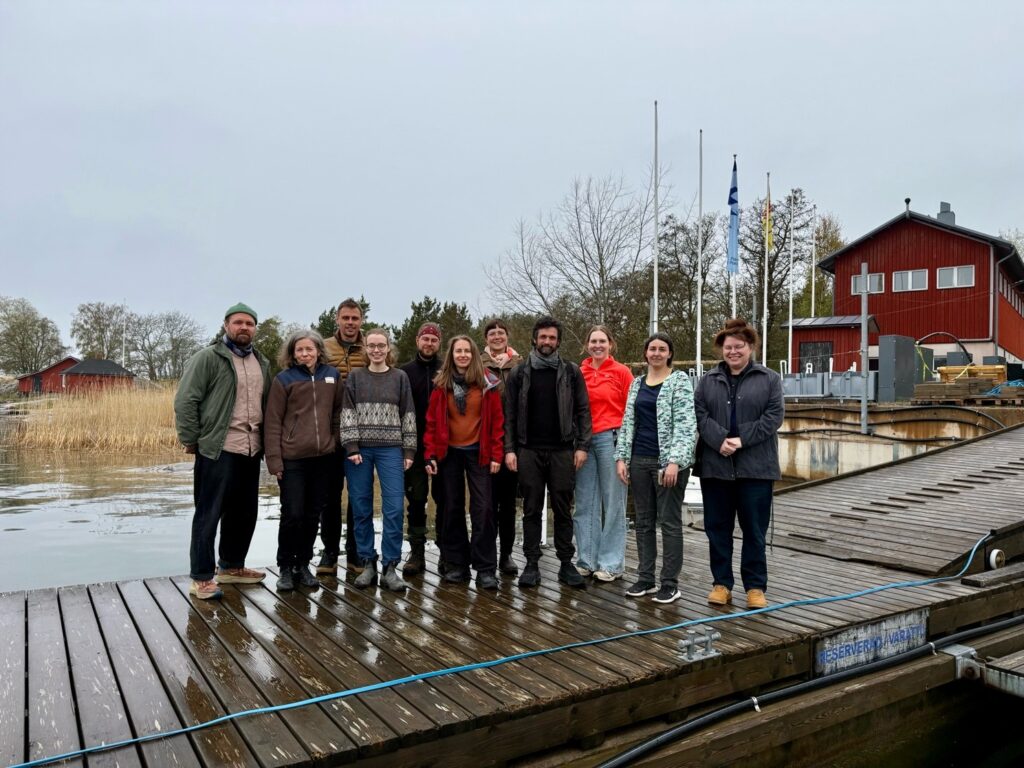
Participants (left to right in the picture below)
Teemu Lehmusruusu, Artist, PhD candidate Aalto University
Tuuli Toivola , Executive Director, Archipelago Center Korpoström
Christian Pansch-Hattich, Natural scientist, ÅAU, SOS
Merle Kleineberg, MSc student, GAME
Jonathan de Koning, MSc student, GAME
Maria Lindeman, Opera director, PhD candidate Stockholm University of the Arts
Agnes Wästfelt, Soprano
Lorenzo Romano, Composer
Petra Avo, MSc student ÅAU
Sarah Rühmkorff, PhD candidate ÅAU
Einat Amir-Ahola, Researcher of Interdisciplinarity, ÅAU, SOS
Authors
Einat Amir-Ahola, Researcher, Åbo Akademi University
Christian Pansch-Hattich, Professor of Marine Ecology, Åbo Akademi University