
The Psych-AID Network, together with its partners, took part in the American Psychology–Law Conference 2026, held in Reno, Nevada. This conference is one of the premier international gatherings in the field of forensic psychology. It attracts a large and diverse audience of both practitioners and academic researchers, providing a key platform for the exchange of cutting-edge research and applied perspectives at the intersection of psychology and the legal system.
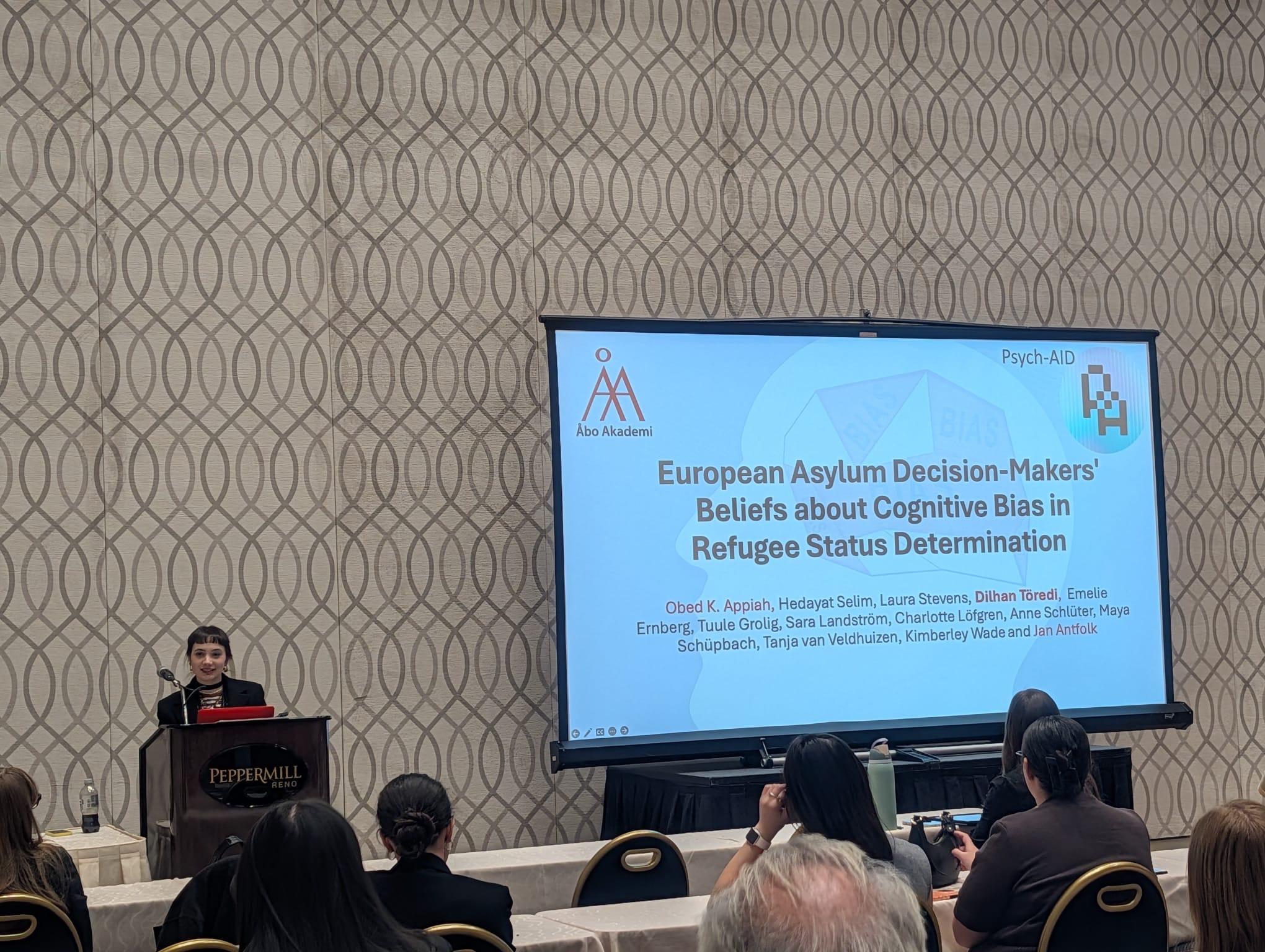
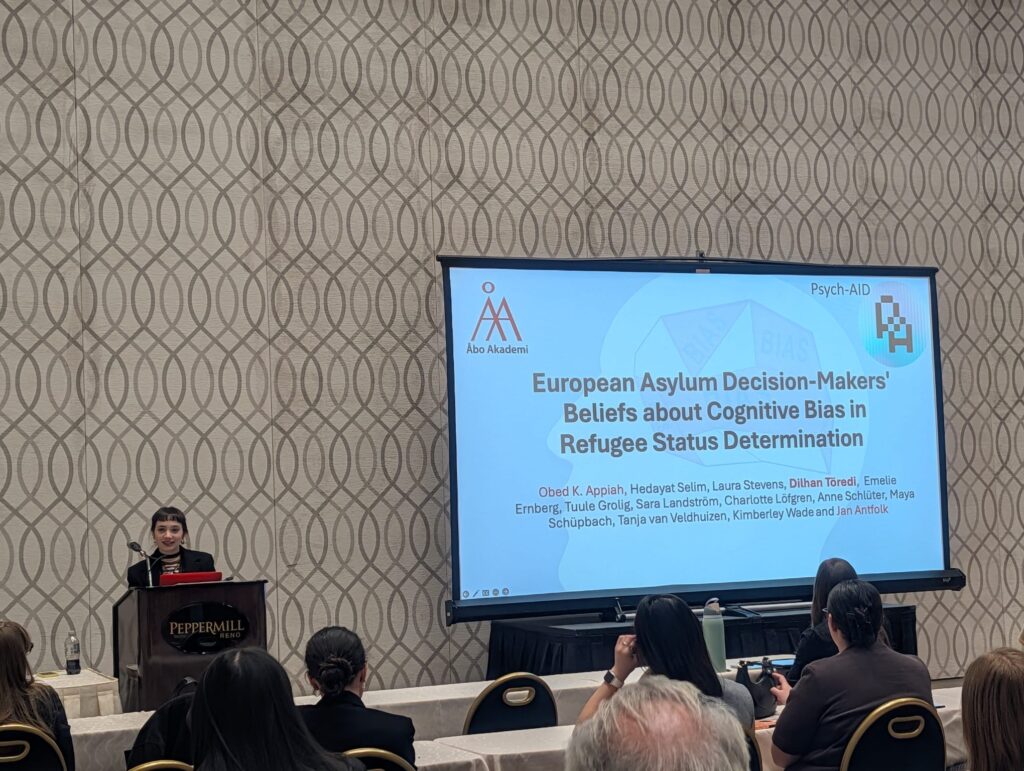
At this year’s conference, our postdoctoral fellow, Dr. Dilhan Töredi, presented PsychAID’s research examining cognitive bias beliefs among asylum officers across Europe. The study offers compelling evidence of two well-documented cognitive phenomena: the bias blind spot—the tendency for individuals to recognise biases in others while remaining unaware of their own—and the illusion of control, where individuals overestimate their ability to control cognitive bias in complex decision-making contexts. The presentation was very well attended and generated strong interest among both researchers and practitioners, highlighting the relevance of cognitive bias research in high-stakes legal and administrative decision-making environments.
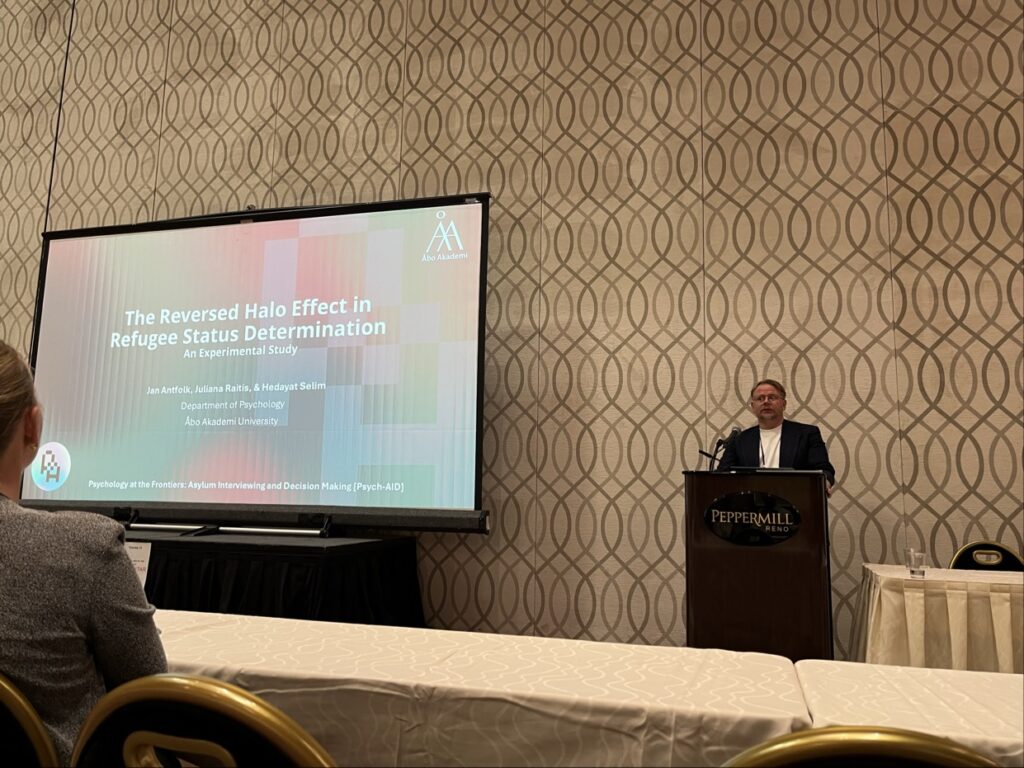
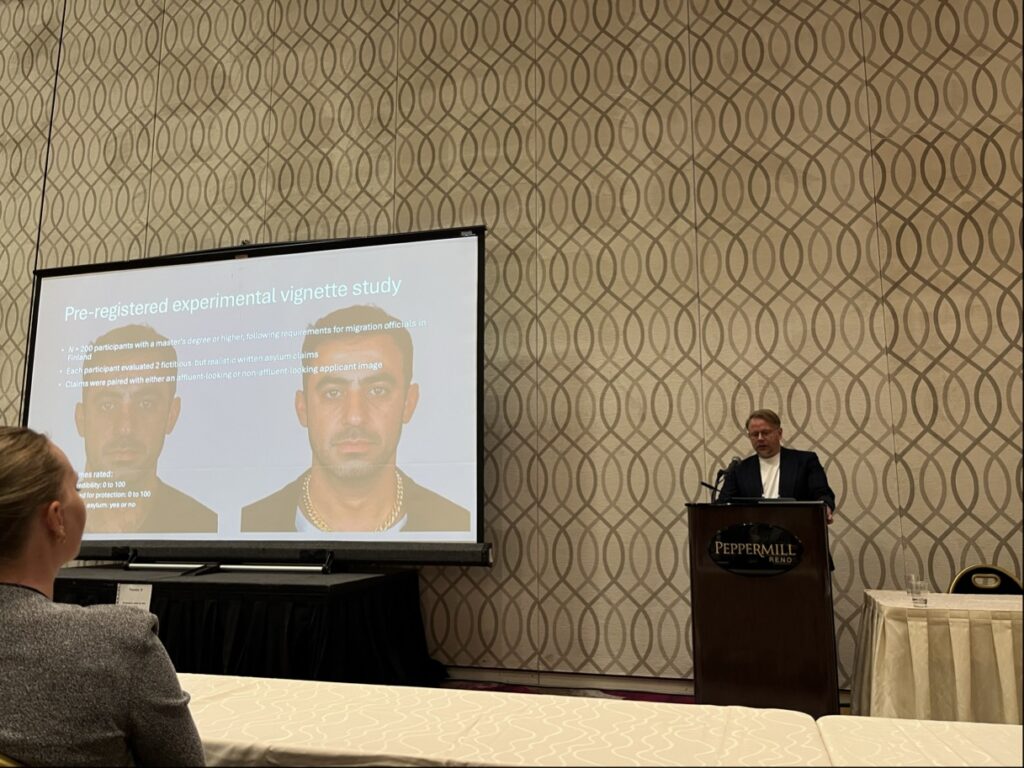
At the same conference, our Principal Investigator, Prof. Jan Antfolk, presented his team’s latest findings on how the halo effect may be reversed in the context of refugee status determination. In this experimental research, the team manipulated photographs of the same individual to appear affluent or non‑affluent, paired with two different narrative accounts. Each story was combined with each image and each place of origin, resulting in eight distinct vignettes. The research aimed to examine how appearance, asylum narratives, and country-of-origin cues influence perceptions of credibility and the perceived need for international protection.
In addition, our advisory board member, Prof. Lorraine Hope, delivered a keynote address that provided a comprehensive overview of the current state of interviewing research. Her talk emphasised both methodological advances and persistent challenges in the field, with particular attention to the influence of cultural factors on interviewing practices and outcomes. She also addressed the evolving landscape of asylum interviewing research, outlining key gaps in the literature and identifying priorities for future investigation, especially in cross-cultural credibility assessments.
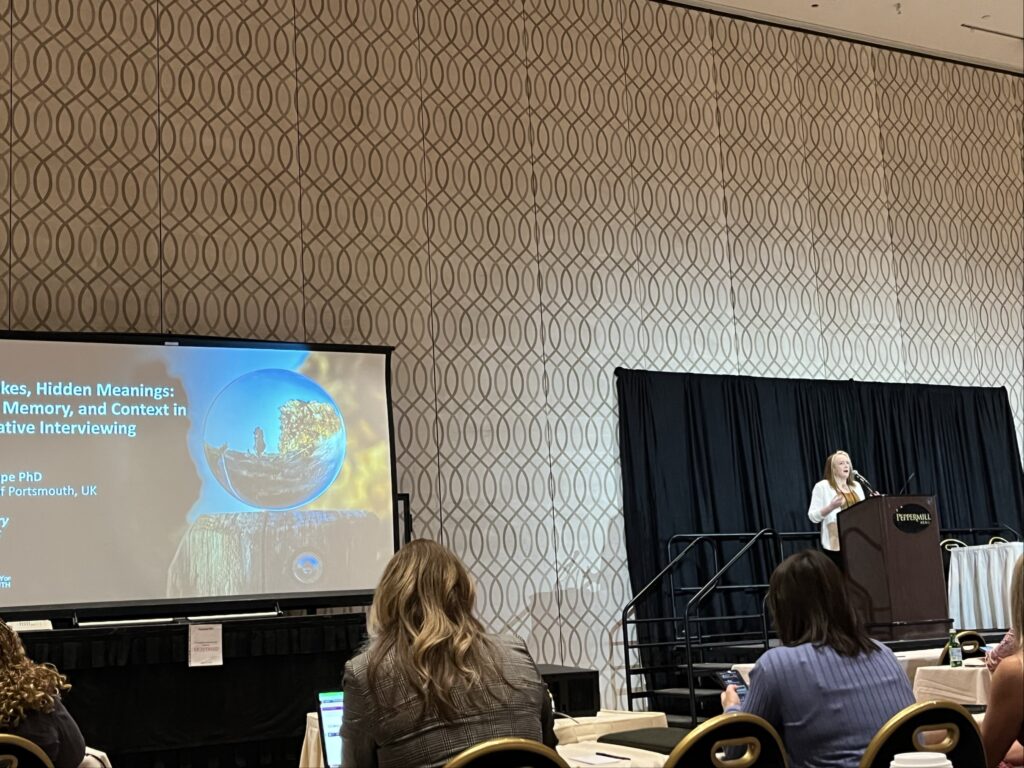 Prof. Hope giving a keynote address.
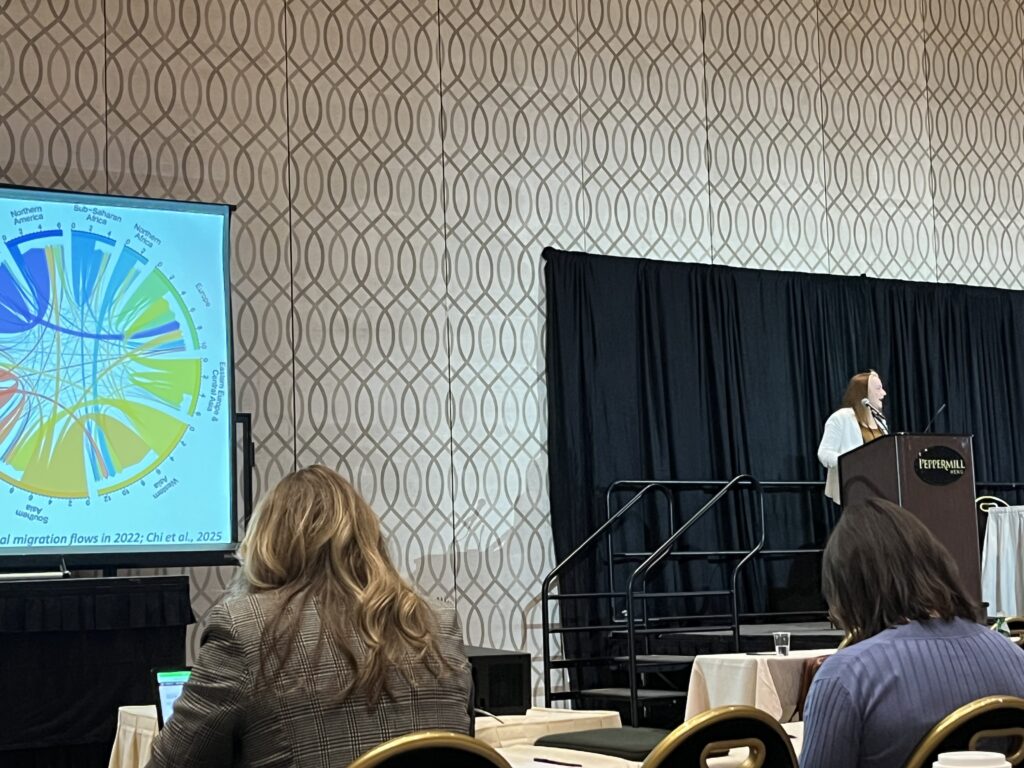 Prof. Hope giving a keynote address.
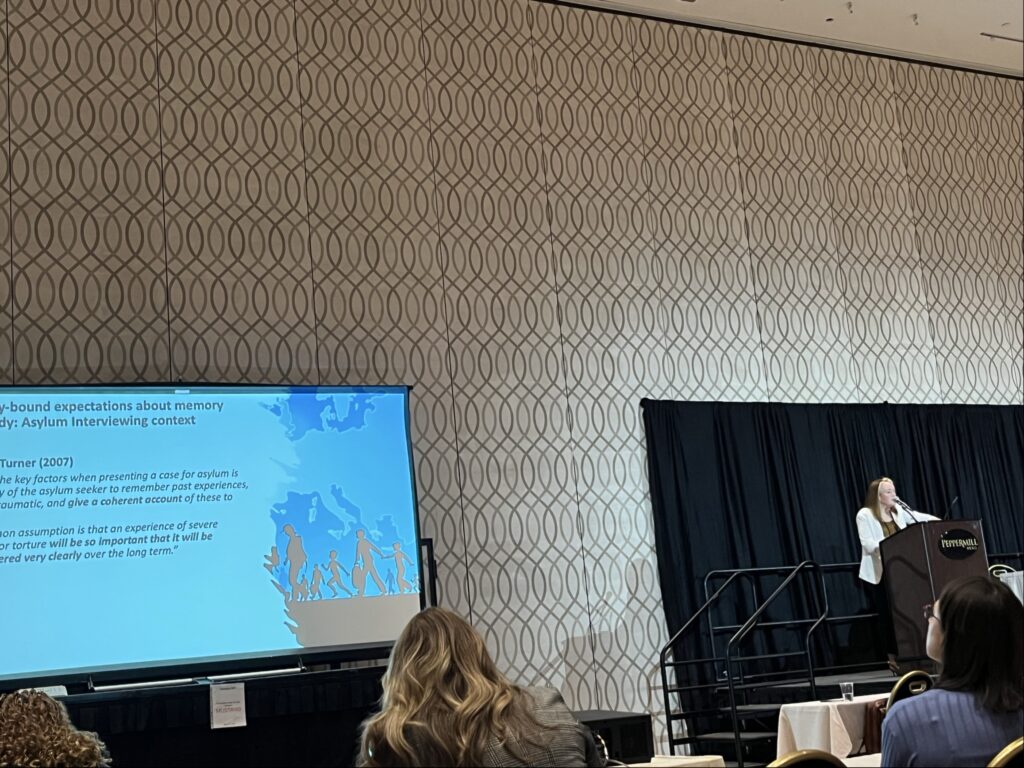 Prof. Hope’s keynote address.
See the presentation slide on cognitive bias below.