
SOS at OSM26: Advancing Transdisciplinary Ocean Research
The Ocean Sciences Meeting 2026 (OSM26), one of largest gatherings of ocean researchers globally, was held 22–27 February in Glasgow, Scotland. The conference united thousands of participants to share cutting-edge research, foster interdisciplinary collaboration, and accelerate progress toward sustainable ocean futures. SOS was proud to contribute to the program through posters, sessions, and talks highlighting our transdisciplinary work.
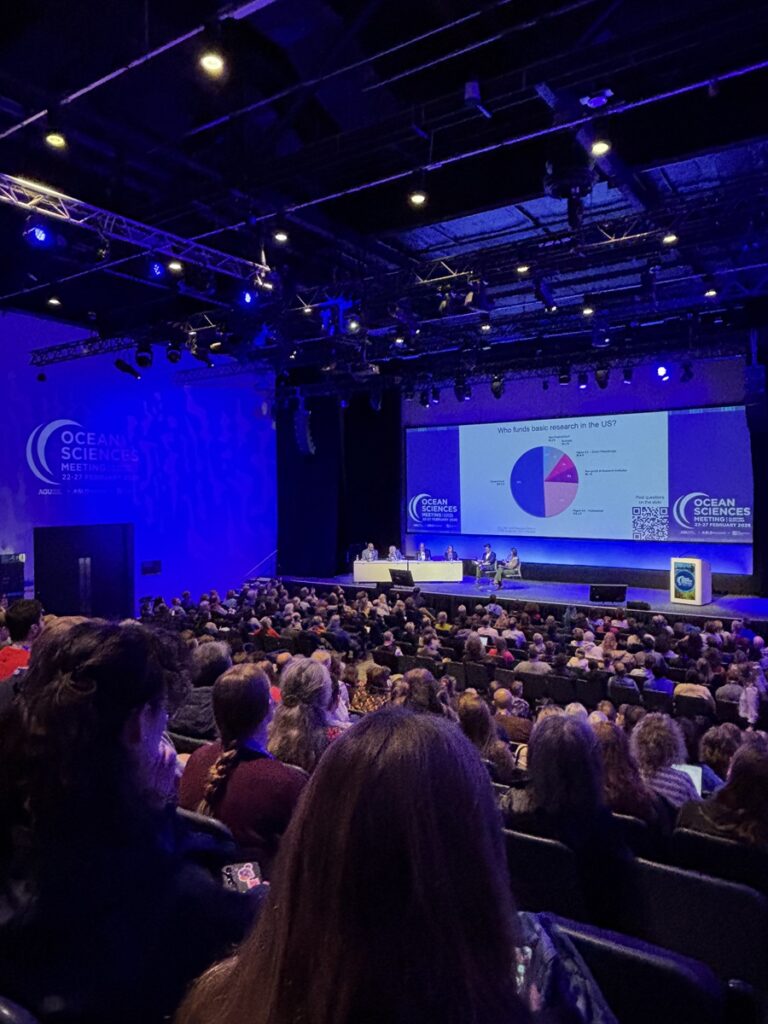
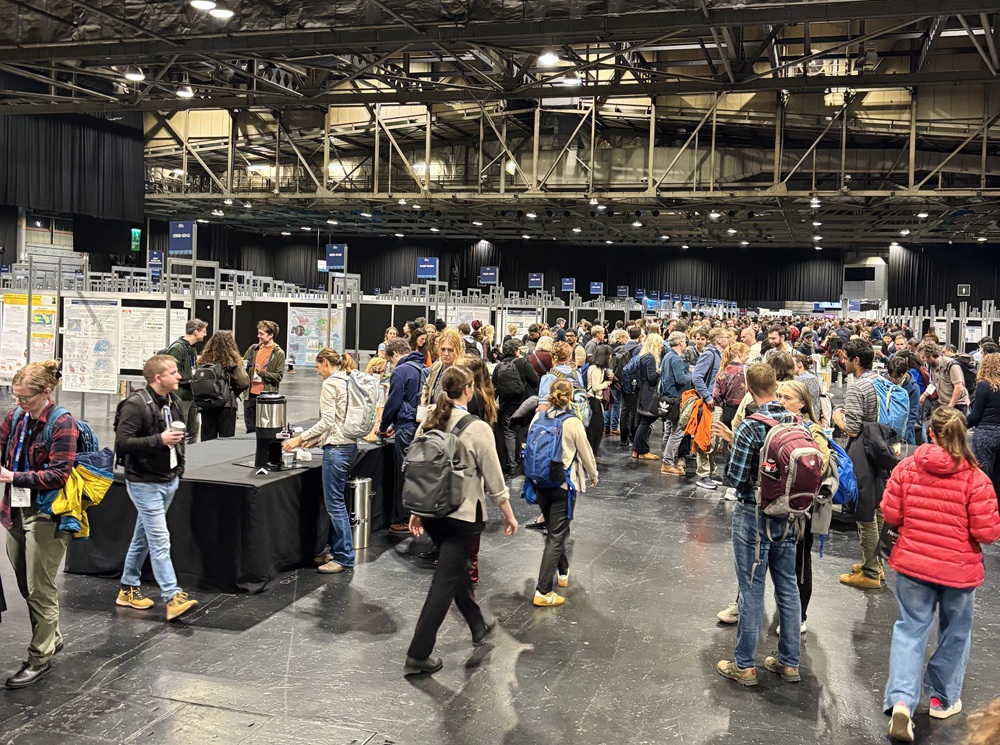
During the last week of February, Glasgow’s Scottish Event Campus buzzed with activity from early morning to evening as the Ocean Sciences Meeting 2026 (OSM26), the flagship biennial conference for ocean science, brought together one of the largest global communities of ocean researchers, policymakers, educators, and ocean-connected organizations and stakeholders. With more than 6000 attendees from over 60 countries, the meeting lived up to its reputation as one of the world’s largest and most diverse convenings of ocean researchers and practitioners. Plenary talks, hands‑on workshops, eLightning sessions, town halls, and a sea of posters filled the week—each one adding something new to a shared picture of where ocean science stands today, and where it needs to go.
The conference was co-sponsored by the American Geophysical Union (AGU), the Association for the Sciences of Limnology and Oceanography (ASLO) and The Oceanography Society (TOS). As an endorsed Decade Action of the UN Decade of Ocean Science for Sustainable Development, the meeting emphasized translating scientific discovery into actionable, equitable, and solution-oriented ocean science.
Sharing our work and strengthening global collaboration
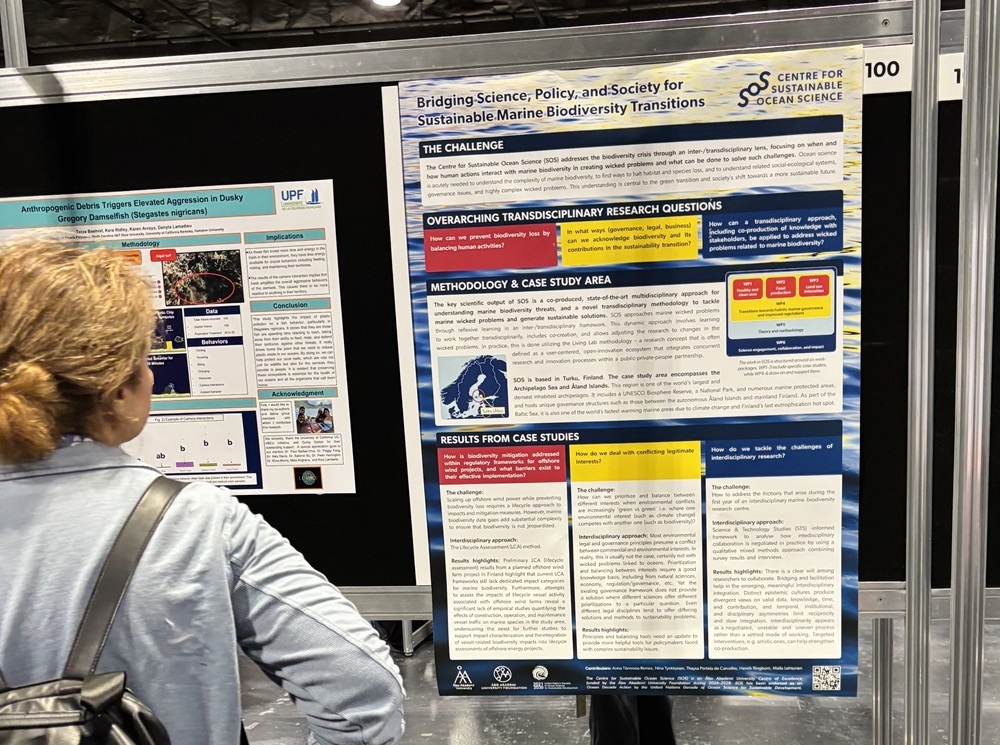
For SOS, the week was both busy and inspiring. Among our contributions to the program was a poster titled “Bridging Science, Policy and Society for Sustainable Marine Biodiversity Transitions: Insights from the Centre for Sustainable Ocean Science,” which highlighted our centre’s overarching research questions and shared preliminary results from our diverse study cases. In conversations during the poster session, we emphasized our commitment to integrating social, ecological, and governance perspectives and enhancing inter- and transdisciplinary research processes to support just and effective transitions toward sustainable marine biodiversity management. We were happy to see that our efforts resonated with so many across regions, disciplines, and sectors.
Another highlight of the week was our role in co-organizing the session “Navigating Boundaries and Power in Transdisciplinary Ocean Research: Toward ‘the Science We Need for the Ocean We Want’” with colleagues from the Environmental Defense Fund and University of California Santa Barbara (USA) and Södertörn University (Sweden). This session explored how ocean research can better account for the human dimensions of sustainability—particularly as ocean-based interventions such as aquaculture, offshore wind, and marine carbon dioxide removal (mCDR) grow in scope and relevance. Through presentations and discussion, we examined the conceptual and methodological challenges of addressing human–ocean connections, including power dynamics in knowledge production and decision-making, interdisciplinary integration, and inclusive stakeholder engagement. The session aligned closely with UN Ocean Decade ambitions—to deliver the science we need for the ocean we want—and created a platform for fruitful dialogue on how to ensure equitable, impactful ocean governance.
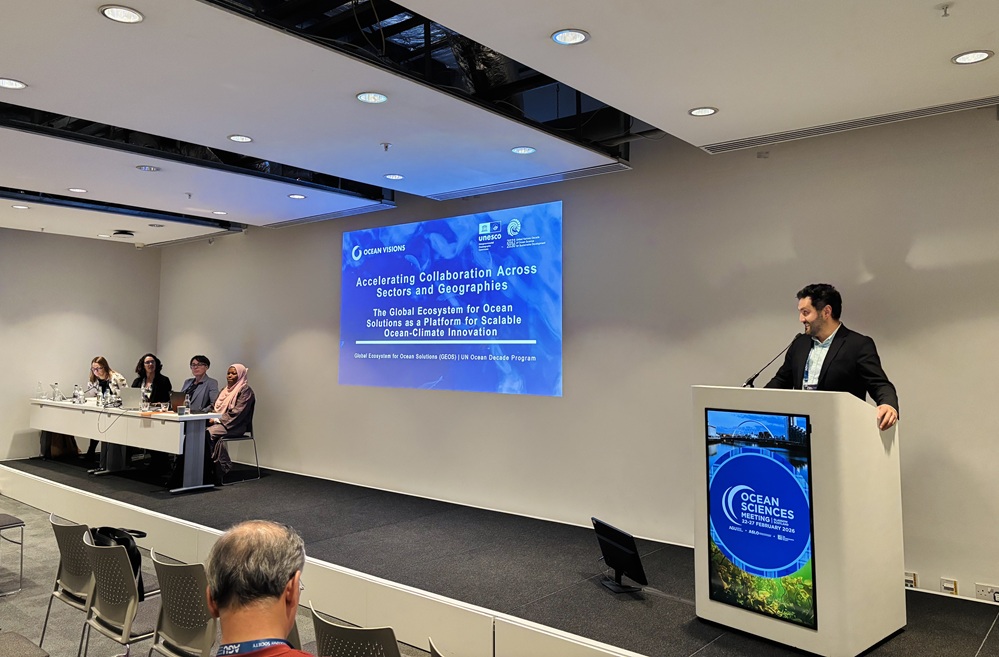
SOS also contributed to an Ocean Outcomes session titled: “Accelerating Collaboration Across Sectors and Geographies: The Global Ecosystem for Ocean Solutions as a Platform for Scalable Ocean‑Climate Innovation.” The Global Ecosystem for Ocean Solutions (GEOS), a program coordinated by Ocean Visions and endorsed by the UN Ocean Decade, is a global network accelerating the development and scaling of equitable, science-based ocean-climate solutions. This session took a close look at how GEOS is helping to bridge gaps between science, policy, philanthropy, and communities—particularly around innovation in areas such as ecosystem restoration and marine carbon dioxide removal. Alongside three fellow GEOS members who introduced their key initiatives, SOS presented concrete examples of projects that link science, industry, and governance in improving and safeguarding biodiversity in the Archipelago Sea area.
Beyond our formal program roles, SOS took part in a dedicated workshop for partners in the GEOS program, organized by Ocean Visions. The workshop reaffirmed how valuable these global alliances are: they help us build shared frameworks, learn from parallel efforts around the world, and develop initiatives that are grounded both in place and in global context. In addition, SOS hosted a dinner for our collaborators, providing an opportunity to expand and deepen partnerships, share progress, and align future priorities.
And throughout the week—between sessions, over coffee, during impromptu hallway meetings—we found ourselves immersed in conversations with both new acquaintances and established collaborators. Those moments, just as much as the formal program, helped us understand where our centre can contribute most meaningfully in the years ahead.
Carrying the momentum forward
Our engagement at OSM26 reaffirmed that addressing today’s most pressing ocean challenges will only be possible if research, policy, and society move forward together—and that centres like ours have a crucial role to play in shaping those connections.
We’re bringing back not just new knowledge, but also new questions, new partnerships, and new motivation. With these, we continue our journey toward co‑creating the science—and the ocean future—we truly want.
Photos: Malla Lehtonen