
Visitor Fees: A Watershed for Islanders
Text & photos: Cecilia Lundberg
Do the benefits outweigh the disadvantages? Some say a clear yes, others firmly no. A cautious middle group agrees only if the fees are voluntary.
This issue sparked lively debate and received the most media attention when islanders from across Finland gathered a few weeks ago.
The Archipelago Summit (Finlands skärgårdsting – Suomen saaristokäräjät) was held for the second time in mid-November 2025 on the island of Suomenlinna/Sveaborg, part of Helsinki.
The first summit took place at Åbo Akademi University in December 2023, coinciding with the closing seminar of the Archipelago Institute’s thematic project Habitability – for viable and habitable archipelago and sea areas. One of the project’s main visions was to establish the foundations for a well-functioning, nationwide grassroots network.
After the project ended, this mission continued under the National Association of Finnish Islands (FÖSS; Finlands Öar – Suomen Saaret). It was inspiring to participate this time and witness that the continuation is in good hands. Not only was the organization excellent, but islanders and others engaged in archipelago issues expressed satisfaction.
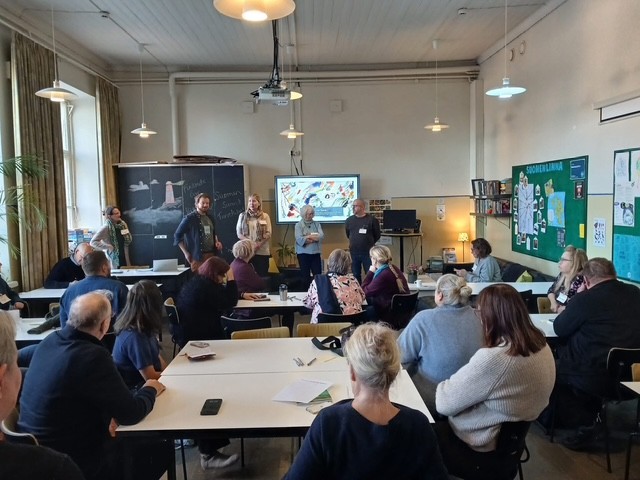
Around one hundred participants represented archipelago areas across Finland, both coastal and inland. The program focused on the economy, services, and the future from an island perspective: financing realities, digital isolation, circular local economies, visitor fees, and demographic changes.
Like the concept of habitability, the program was island-centered: created for islanders and delivered largely by islanders.
In addition to traditional presentations, a significant share of the program consisted of interactive small-group discussions on current themes. The summaries of these discussions resulted in collective opinions on services, finance, and visitor fees—key questions for the habitability of islands.
Archipelagos share many challenges with rural areas, such as depopulation. Yet they are also distinct. They host larger numbers of part-time residents and tourists—for better and for worse. How can the untapped potential of part-time residents be harnessed? Could encouraging some to settle permanently be the “wild card” that reverses negative trends? Conversely, how can islands sustainably manage the intense but short-lived pressure of tourism?
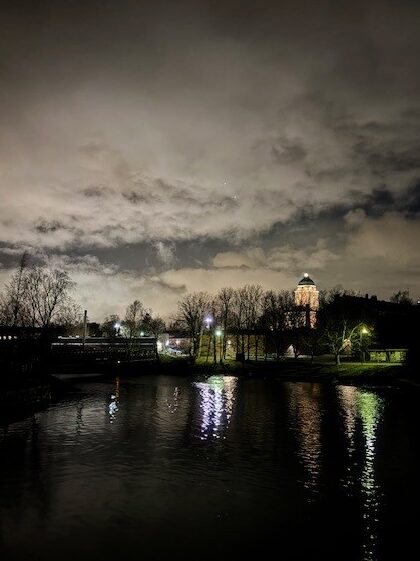
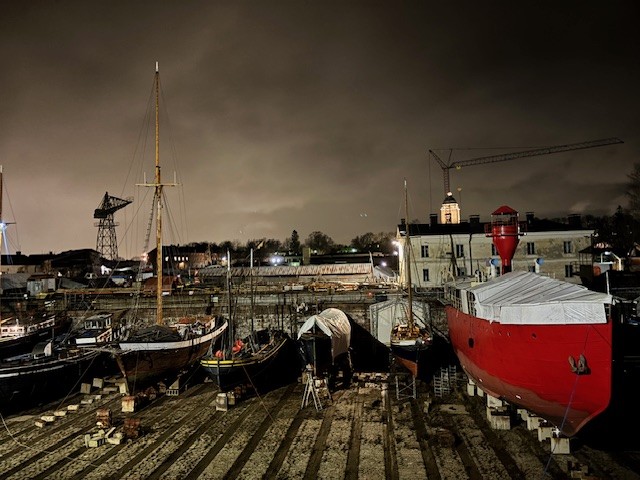
There was also time for networking, and participants gained insight into the unique island life of Suomenlinna/Sveaborg. In the dark evening, the local residents’ association offered a guided tour of the island. As always, island life shows both similarities and differences—whether comparing an island just 15 minutes from central Helsinki with Oravi in the Saimaa lake district or Iniö in the archipelago west of Turku/Åbo.
The full program of the Archipelago Summit is available at https://foss.fi/2263/
The next summit will take place in two years.
Author
Cecilia Lundberg, SOS Co-creation Coordinator & Coordinator at the Archipelago Institute at Åbo Akademi University