RelEx Online Workshop on Data Collection Progress and Challenges
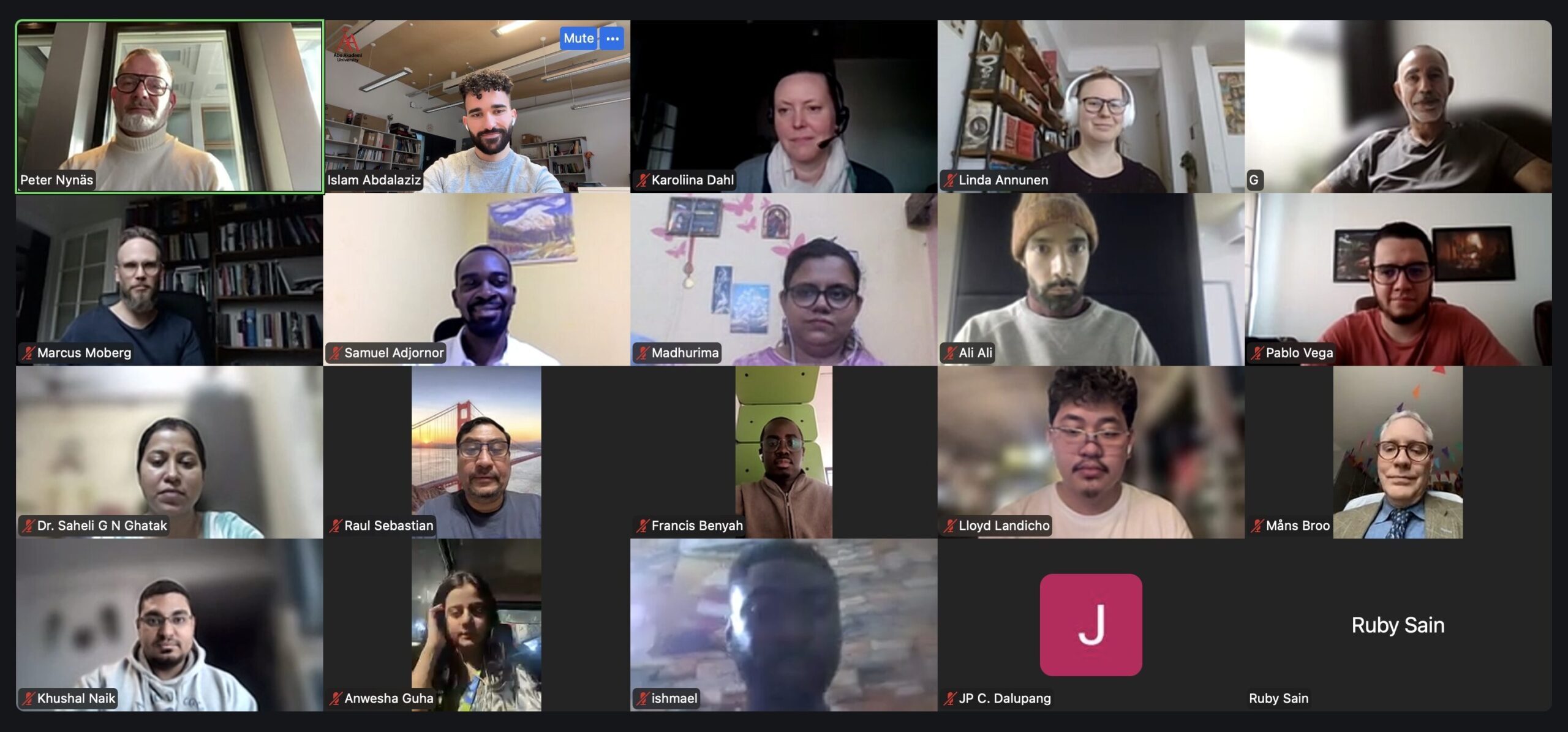
On Monday, March 23rd, the RelEx project met for an online workshop with affiliated researchers from the national teams in India, the Philippines, Ghana, Peru, and Finland. We aimed the workshop to be a space for the teams to share their experiences and to reflect on methodological challenges encountered during outreach and data collection. Speakers from each team gave short presentations on contacting potential participants, data collection, and the challenges they encountered and addressed. This was followed by a joint discussion on how to address these issues and plan the next steps of the project.
One of the key questions we discussed was how to encourage participants to take part in our study, i.e., how to make participation meaningful, interesting, valuable, or even enjoyable. This was discussed in light of what Khushal Naik described as “research fatigue” among more vulnerable communities involved in the fieldwork. Madhurima Dasgupta shared that some participants in the LGBTQ+ community in India expressed skepticism about the value of participating in the study, noting that they had previously been approached by multiple research projects without seeing tangible outcomes or meaningful consequences. Reflecting on the data collection in Finland, Ali Ali noted that participants found it exciting to participate. However, keeping track of these participants and acting on their willingness to participate in a timely and responsible manner was the main challenge. This partly meant negotiating a suitable place and time for participants and preparing the necessary conditions for their participation in the full process (questionnaires, sorting, and post-sorting interview). Moreover, as Ali noted, participants did feel it was more interesting to participate in the process in a way that was less strict than as prescribed in the methods. For example, some participants expressed reluctance to answer certain questions and offered informative explanations. Conversely, they made many valuable comments on other questions, even when comments were not accommodated by the method (e.g., in questionnaires/surveys).
The workshop helped identify not only shared challenges across the national teams but also how these challenges figure in each national context and circumstance. It also laid the groundwork for continued, vigorous collaboration among the teams, keeping them updated on each other’s work and addressing issues that emerge in the field.